South Africa’s Cannabis Industry Must Put Local Communities First
South Africa’s cannabis sector has often been promoted as a future export powerhouse capable of generating significant foreign revenue. However, growing voices within the industry argue that the country’s greatest opportunity lies much closer to home. Rather than focusing primarily on international markets, South Africa should prioritize building a strong domestic cannabis economy that creates jobs, supports small-scale farmers, and delivers meaningful benefits to local communities.
The Promise of a Homegrown Cannabis Economy
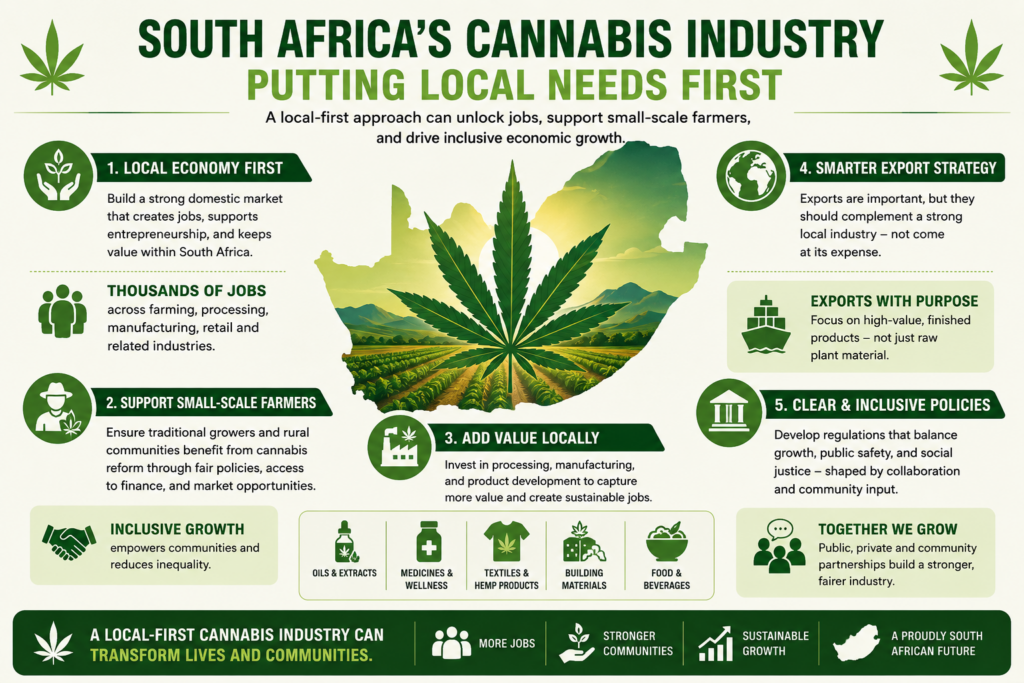
The legalization and regulation of cannabis have opened new possibilities for economic development across South Africa. With favorable growing conditions, a long history of cultivation, and increasing global demand for cannabis products, the country is well-positioned to become a major player in the industry.
Yet, many industry stakeholders believe that export-driven strategies alone may not deliver the broad-based economic transformation that South Africa needs. A thriving local cannabis market could generate employment opportunities, encourage entrepreneurship, and create value-added industries that benefit communities across the country.
By investing in local processing, manufacturing, research, and retail opportunities, South Africa can capture more value from the cannabis supply chain instead of exporting raw materials and importing finished products at a higher cost.
Supporting Small-Scale Farmers
One of the most important challenges facing the cannabis sector is ensuring that traditional growers and small-scale farmers are not excluded from the legal market. Many rural communities have cultivated cannabis for generations, often under difficult economic conditions.
Industry advocates argue that these communities should be among the primary beneficiaries of cannabis reform. Simplified licensing processes, access to financing, technical support, and market access can help small farmers participate meaningfully in the legal economy.
Without inclusive policies, there is a risk that large corporations will dominate the industry while rural growers remain marginalized.
Moving Beyond the CBD and THC Debate
Another issue attracting attention is the tendency to separate cannabis discussions into narrow categories such as CBD and THC products. While these distinctions are important from a regulatory perspective, some experts believe that a sustainable industry requires a broader understanding of the cannabis plant and its many potential applications.
Cannabis can be used in agriculture, medicine, wellness products, textiles, construction materials, food production, and industrial manufacturing. A comprehensive industry strategy should therefore consider the entire value chain rather than focusing on individual components alone.
Creating Jobs Through Value Addition
Export markets undoubtedly offer opportunities, but local value addition may provide even greater long-term benefits. Processing cannabis into oils, pharmaceuticals, wellness products, hemp-based materials, and consumer goods can create significantly more jobs than exporting raw plant material.
Developing these downstream industries would not only strengthen the economy but also encourage skills development, innovation, and investment in local communities.
For South Africa, the real opportunity may lie in becoming a producer of high-value cannabis products rather than simply a supplier of raw agricultural commodities.
The Need for Clear and Inclusive Policies
Industry growth depends heavily on regulatory certainty. Investors, farmers, and entrepreneurs need clear rules that encourage participation while protecting public interests.
Many stakeholders believe South Africa has an opportunity to develop a cannabis framework that reflects local realities and African priorities rather than relying entirely on international models. Effective regulation should balance economic growth, public safety, social justice, and community participation.
Public consultation and collaboration between government, industry leaders, and local communities will be essential if the sector is to achieve its full potential.
Looking Ahead
South Africa’s cannabis industry stands at an important crossroads. While export opportunities remain attractive, long-term success may depend on building a strong domestic market first. By focusing on local economic development, supporting small-scale farmers, encouraging value-added production, and creating inclusive policies, the country can ensure that cannabis reform benefits a much broader segment of society.
If managed effectively, the cannabis sector could become more than just a new agricultural industry—it could serve as a catalyst for rural development, job creation, and economic empowerment throughout South Africa.